patriarchal medical authority
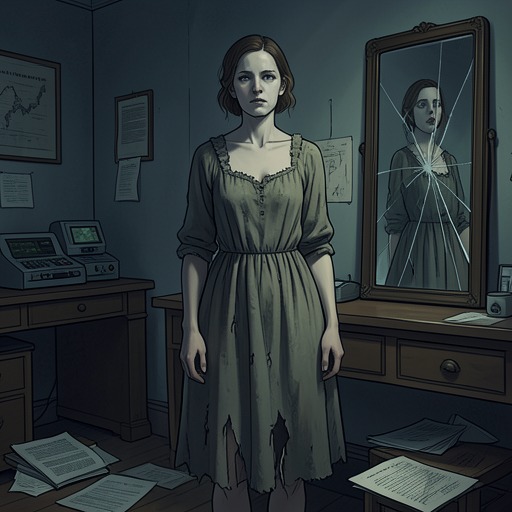
The Yellow Wall PaperPatriarchal medical authority in “The Yellow Wallpaper” is the power exercised when John’s standing as a physician and husband allows his diagnosis and treatment plan to outweigh the narrator’s testimony about her own condition. Its reach extends beyond medical prescriptions: it names her distress as a temporary nervous problem, restricts her writing, discounts her perceptions, and makes disagreement appear to be further evidence that she must control herself. The private narrative exposes the cost of that authority by preserving what its confident assessments leave out: the narrator’s continuing suffering and her repeated efforts to say what might help her.
Professional Judgment and the Diagnosis
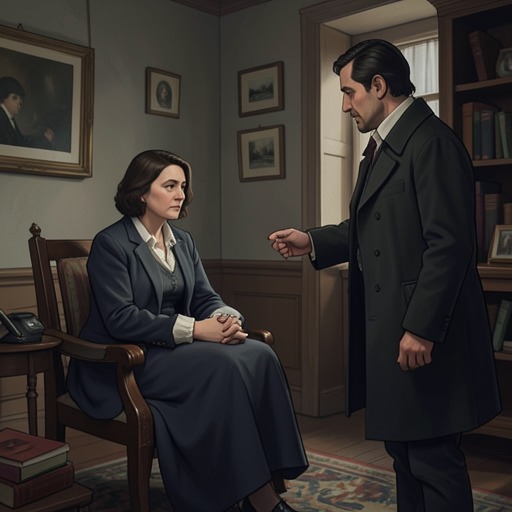
John’s authority rests on both his medical position and his intimate place in the marriage. The narrator emphasizes that he is practical, distrustful of superstition, and dismissive of what cannot be observed and measured. She wonders privately whether his being a physician is one reason she does not recover faster, then states the central contradiction plainly: he does not believe she is sick. His judgment is reinforced by her brother, also a physician of high standing, and presented to family and friends as an authoritative account of her condition: temporary nervous depression, with a slight hysterical tendency.
That public diagnosis does not resolve the narrator’s private experience. She calls herself fortunate that the case is not serious, yet describes the nervous troubles as depressing and says John does not know how much she suffers. His assurance that there is no reason for suffering satisfies him; it does not satisfy her. The distinction between his explanations and her sensations makes medical authority a struggle over which account counts as knowledge, rather than merely a disagreement about terminology.
Treatment, Prohibition, and Dependence
The prescribed regimen organizes the narrator’s daily life. She takes phosphates or phosphites, tonics, journeys, and fresh air and exercise, while being absolutely forbidden to work until she is well. The prohibition reaches the activity she believes could help: she thinks congenial work, excitement, and change would improve her condition, and that writing might relieve the pressure of her ideas. Yet writing becomes something she does secretly. The effort of concealment exhausts her, and the prospect of opposition makes the work more difficult still.
John also discourages the social and intellectual stimulation she requests. He says thinking about her condition is the worst thing she can do, while she admits that the subject makes her feel bad. When she imagines that companionship and stimulus might help, his preferred response is to leave the matter alone. Even a prospective visit from Cousin Henry and Julia is deferred until she is well; John treats their stimulating presence as too much for her in the meantime. The pattern is not simply that he provides treatment, but that his account of treatment defines which activities, company, and forms of self-expression she may have.
Disagreement and the Control of Perception
The narrator does not accept the doctors’ ideas, but her disagreement has little practical force. John initially intends to replace the wallpaper, then reverses course because he believes changing it would mean giving way to her fancy. He predicts that she would next object to the heavy bedstead, the barred windows, or the gate at the head of the stairs, and invokes the short rental as another reason not to renovate. By turning a specific request into a warning about a chain of unreasonable demands, he makes her perception itself the problem to be managed.
The same logic governs his response to her imaginative habits. John tells her that her tendency to make up stories could lead to excited fancies and that she should use will and good sense to check them. She tries to comply, even while describing the garden, shaded paths, and bay from the nursery windows and admitting that she fancies she sees people there. Her account shows authority working through self-monitoring: she has been instructed to distrust and correct her own imagination, not simply prevented from speaking openly.
Requests to Leave and Competing Evidence
When the narrator tells John that she is not improving and asks to leave the house, he answers with practical and medical reasons to stay. The lease has three weeks to run, repairs at home are unfinished, and he says he cannot leave town unless she is in danger. He also insists that she is gaining flesh and color and that her appetite is better. Her reply supplies a different measure: she says she weighs no more, or less, and that her appetite is worse in the morning when John is away, even if it seems better in the evening when he is present.
John’s affection does not displace his authority. He gathers her up, reads to her until her head is tired, calls her his darling and comfort, and urges her to take care of herself for his sake. But when she begins to distinguish being better in body from some other kind of improvement, his stern, reproachful look stops her. He then appeals to their child as well as to himself, insisting that she must not entertain the idea she was about to express and asking whether she cannot trust him as a physician. She says no more, though she lies awake afterward wondering whether the wallpaper’s front and back patterns move together or separately. The scene makes the imbalance tangible: her request and counter-evidence are voiced, but professional certainty and marital pressure close the discussion.
Consequences and Narrative Significance
John’s treatment of disagreement also appears in his threat to send her to Weir Mitchell in the fall if she does not improve faster. The narrator does not want to go: a friend who had been in his care described him as like John and her brother, only more so, and the journey itself seems burdensome. In the narrator’s account, the prospect extends the same authority beyond the household, rather than offering a form of care she has chosen.
The private narrative creates a record beside the medical one. John can report improvement through appetite, appearance, or weight; the narrator records exhaustion, distress, a wish to work, and a direct request to leave. Her writing is itself constrained by the treatment it describes, so its secrecy conveys both the suppression of her voice and the effort required to preserve it. The central conflict is therefore not that medicine and care are inherently opposed, but that John’s certainty allows his interpretation to stand in for hers. His insistence that she use will and self-control turns the burden of recovery back upon the patient, even as the account repeatedly shows that her own assessment and preferences are not being given equal weight.